Aiki-jo
Aiki-jo is the staff system of aikido's founder, best known today through Morihiro Saito's Iwama curriculum: 20 suburi (solo striking drills), the 13- and 31-count kata, and paired kumijo. For solo practice: master the suburi groups first, then the 13 kata, then the 31.
Starter program (from zero)
- Weeks 1-2: tsuki series (suburi 1-5), 10 reps each — 15 min daily
- Weeks 3-4: add the uchikomi series (6-10)
- Weeks 5-6: add the katate series (11-13) and happo giri
- Weeks 7-8: add hasso gaeshi (14-18); start the 13 kata from video
- Week 9+: 10 min mixed suburi + 13 kata ×5; add the 31 section by section
Kata / Forms
13 no jo kata 十三の形
BeginnerThe 13-count introductory kata combining tsuki, gedan gaeshi, men uchi and hasso gaeshi in one flow with happo-style turns.
The step-by-step breakdown is being verified by a practitioner and will be added — learn the sequence from the video for now.
31 no jo kata 三十一の形
IntermediateThe backbone of the Iwama curriculum: a 31-count kata, best memorised in six sections, each a coherent attack-response scenario.
The step-by-step breakdown is being verified by a practitioner and will be added — learn the sequence from the video for now.
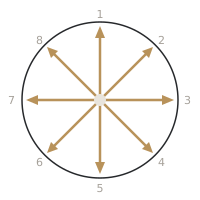
Happo giri 八方切り
BeginnerCutting to eight directions in sequence — the best warm-up for footwork and balance.
Techniques & Strikes
Tsuki series — suburi 1-5
- Choku tsuki
- Straight thrust; rear hand drives, front hand aims. Target chudan.
- Kaeshi tsuki
- Turning thrust: the tip deflects, then thrusts. Drill the hand change slowly.
- Ushiro tsuki
- Rear thrust — look first, then rotate the hips.
- Tsuki gedan gaeshi
- Thrust then low sweep at knee height; power from the torso, not the arms.
- Tsuki jodan gaeshi uchi
- Thrust, high turn, overhead strike — practise in three parts.
Uchikomi series — suburi 6-10
- Shomen uchikomi
- Overhead centre strike; finish with the tip at eye level.
- Renzoku uchikomi
- Continuous alternating strikes — a rhythm drill.
- Men uchi gedan gaeshi
- Head strike flowing into a low sweep on the same step.
- Men uchi ushiro tsuki
- Head strike forward, thrust to the rear — two-opponent assumption.
- Gyaku yokomen ushiro tsuki
- Reverse side strike to the temple, then rear thrust.
Katate series — suburi 11-13
- Katate gedan gaeshi
- One-handed low sweep; mind the wrist load.
- Katate toma uchi
- One-handed long-range strike from the very end of the jo.
- Katate hachi no ji gaeshi
- One-handed figure-eight — the basis of jo spinning.
Hasso gaeshi series — suburi 14-18
- Hasso gaeshi uchi
- Turn the jo up to hasso at the shoulder, strike from there.
- Hasso gaeshi tsuki
- Thrust from hasso.
- Hasso gaeshi ushiro tsuki
- Rear thrust from hasso.
- Hasso gaeshi ushiro uchi
- Rear strike from hasso.
- Hasso gaeshi ushiro barai
- Rear sweep from hasso — impossible without hip rotation.
Nagare gaeshi — suburi 19-20
- Hidari nagare gaeshi uchi
- Flowing left deflection merging into a strike.
- Migi nagare gaeshi tsuki
- Flowing right deflection into a thrust; chains into freestyle work.
Tips
- Keep the jo dry and oil it occasionally (linseed/tung oil) — a cracked shaft can splinter under full-power suburi.
- Wrist pain is a signal to slow down, not to stop; fix the line before adding speed.
- Counting the 13- and 31-count kata out loud speeds up memorising the rhythm.
Turn this guide into a daily practice: log your sessions, keep your streak, earn belts.
Sign up